Wednesday, July 04, 2018

Pacific Northwest Rural Warming

The person I debated on the Lars Larson show last week said that there's been no warming in Oregon except for the urban heat island effect. He just claimed it again on a blog, though, as always, presented no data to support his claim.

So I'll present some data for him, showing that many rural sites in Oregon do in fact show warming. Not all, but most:


Adding some more, from around Oregon, Washington and Idaho:


Monday, July 02, 2018

Lars Larson Video Kerfuffle Update

7/2 11:10 am - The Larson show's content producer and I have spoken, and he apologized and said he would never have done that (posted the after-show video), that it was done by someone beneath him in the organization, and when I brought it to his attention he had it removed immediately. I appreciated that very much and told him so, and reiterated that I had no problem with the show itself being posted anywhere.

Sunday, July 01, 2018

How Anthony Watts Operates

Here is Anthony Watts' excuse for his false insinuation that I threatened a legal action to get a post-debate video removed from Lars Larson's Youtube channel:


Why did he offer any opinions at all? Why not get the facts first? Why didn't he contact me to ask what actually transpired? And wait until he knew.

I even left him a voice mail yesterday to ask him to stop it. I gave him my phone number. He never returned my call.

Because that's not how Anthony Watts operates. Instead he thinks it just fine to make false insinuations and broadcast them to the world and then let them hang out there forever, maybe letting is victim respond (maybe) to defend himself. By then, of course the damage is already done. Watts knows that. He knows what game he's playing.

And you can only defend yourself only if Watts allows you to reply to comments. Otherwise he "punishes" someone by moderating them or deleting them. He lets people lie, claiming I used sock puppets on his blog. Completely false. Another lie he hasn't let me respond to. Now I'm moderated there and little gets through, and I have no way to defend myself there amongst a mountain of impolite, rude, false and vile insults against me.

(Of course, none of them have the balls to come over here and say anything, let alone using their real names. They stay in their dark corner, where it's safe and all insults about me are allowed. Chuck Wiese too. Deniers never try to read the blogs that are presenting real science, or engage there. They need constant reassurance, comment after endless comment, that someone, somewhere, agrees with their conspiracies and hatred. No one who understands the science and knows the evidence needs that kind of endless reassurance -- they know what they know and want to learn more. There are interesting and important topics in climate science that are open, uncertain, and are worthy of discussion. As someone once said, climate science needs a far better class of skeptics -- real skeptics.)

And Watts wonders why the science community completely ignores him and scoffs at the mention of his name. It's a reputation he's thoroughly earned.

Here's what actually happened on Thursday. In the weeks leading up to the debate, the Executive Producer of the show said in an email that I would be asked to sign a waiver for them to use the audio and video. I was never offered any waiver when I was there, and frankly never even thought it about, since I was pretty busy with, you know, thinking about what I was going to say and then saying it.

I didn't have, and still don't, any problem with them airing the audio/video of the debate itself. And I've told them that. But I was very surprised to learn that they kept their camera rolling after the show ended. I never expected that. Maybe I'm naive, and maybe I made a mistake by trusting a conservative to play fair. I think it was sneaky. I think they wanted a controversy to draw attention to their show. (Isn't that how all conservative talk show hosts and conservative pundits  operate? Rush Limbaugh is more responsible than any other single person for the polarity that divides the US today. And how did he do that? By making false insinuations, just like Watts, and being purposely outrageous, like, to cite just one example, coining the word "feminazi.")

Update 7/2 11:10 am - The Larson show's content producer and I have spoken, and he apologized and said he would never have done that (posted the after-show video), that it was done by someone beneath him in the organization, and when I brought it to his attention he had it removed immediately. I appreciated that very much and told him so, and reiterated that I had no problem with the show itself being posted anywhere. 

So after I got home and learned that an after-the-debate video appeared, I pointed out to the exec producer and Lars that no waiver was offered and so none was signed. I told them I had no problems with them using the debate audio and video, but would they "please remove" the after-debate video. I haven't even watched it yet -- I only saw what was the front page of the video itself. But I know what transpired. I think it was sneaky to still record after the debate ended and I (and everyone else, for that matter) had let my guard down.

But Watts' asked me about none of this -- he just dangled a lie, which he thinks is just an "opinion."
--

I hate this shit too but I gotta defend myself.

More of how Anthony Watts operates: he's still trying to claim that I insulted his dead mother! This one scraps the ground pretty low. See, I once made a joke about his hefty denialism, writing somethink like "Anthony Watts Denies His Mother Exists." Did I know the first thing about his mother? Of course not. Clearly I was trying to illustrate his extreme denialism by choosing something that would be impossible to deny -- the existence of one's own mother. After all, you wouldn't be here without a mother.

But Watts saw another opportunity to twist someone's words into something that smeared them and let him again play the victim. Because, you know, those poor poor deniers. Seeing another chance to go low, Watts took it of course. It's how the science deniers operate, and I've gotten one-millionth of the invective of people like Ben Santer, Michael Mann, Phil Jones and William Connelley and Tamino others have received.

If you can't win the science, swing for their knees. Heartland (who has paid Watts money) does it, goons like Chris Horner and Steve Milloy do it, Joe Barton and Louie Gohmert have done it. That's why it's so satisfying that Michael Mann took all of them on, gave as good as he got and more, and has emerged as one of the most prolific, honored and quoted climate scientists in the world. (And I knew him before he was famous!)

Remember, Watts also lied about agreeing to accept the results of Richard Mueller's BEST project. "I'm prepared to accept whatever result they produce, even if it proves my premise wrong," Watts said. Then he refused.

Deniers. You can't trust 'em. Watts' blog is  like an open sewer, and those things ooze from the top and take the most negative gradient downhill.

PS: And, yes, I still think Anthony Watts will apologize for his blog before he dies.

Was the Medieval Warm Period Global? (No)

One of the set-up questions I got from Lars Larson on Thursday was "Did you ever hear of the Medieval Warm Period?" Of course I have, and my reply was that of course I did, but it was global. It wasn't a global warming, which, like everything I said on Thursday, was met with incredulity.

So what's the evidence? This is all old stuff, but I'm going to go through it again.

Before I get to the evidence, it's necessary to point out that deniers don't understand the significance of this question. They think that aha, I got you, if was warmer back then before there were SUVs then you can't blame modern warming on fossil fuels! Which is just a bad logical error.

Yes, the climate changes, but not always for the same reason. There isn't only one reason why climate changes -- CO2 -- and nothing else can ever change it. There are many factors that cause climate change besides greater atmospheric CO2 -- orbital (Milankovitch) cycles, changes in solar output, significant volcanic aerosols that lead to cooling (with enough emitted aerosols the cooling can be enhanced by the ice-albedo feedback, which is probably what caused the Little Ice Age (also not global)), an asteroid or comet strike, meltwater from ice sheets, some reasons I've probably forgotten, and then that one damn butterfly in China who alone seems responsible for a great deal of the trouble and strife in this sordid, chaotic world.


Most "contrarians" (cough cough) seem to think the Sun caused a global Medieval Warm Period (MWP). What's the data?

Recently Judith Lean wrote a paper giving the reconstructed solar output from 850 C.E. onward; plot to the right. (Click to enlarge).

Looking at the top graph, for TSI, there doesn't seem to be much of a global MWP there, does there?

But let's play along with the deniers and assume a 1 W/m2 increase in solar irradiance, at the top of the atmosphere. How much temperature change might that cause?

The IPCC 5AR puts solar forcing at about 0.1°C per W/m2. So does this rough calculation: the zero-dimensional energy balance, no atmosphere model:

(For its derivation, see Pierrehumbert's textbook, equation 3.6, pp 114-115) where S is solar irradiance = 1365 W/m2. This gives T = 255°C, Earth's "brightness temperature" -- the global average surface temperature if Earth had no atmosphere, or as it is seen from outside the atmosphere. Then


So how is the sun going to cause a warm period? It's not. Deniers think the climate is much more sensitive to solar radiance than it really is.

If the climate was so sensitive to solar forcing -- say, 1°C per W/m2 -- then the forcing from CO2 doubling = α*ln(2) = (5.35 W/m2)*ln(2) = 3.7 degC, before feedbacks.

So then we'd have even more to worry about from anthropogenic GHGs.

None of this is new, as I wrote. But I wanted to make this point again.

So, was the MWP global, like Lars Larson suggested? The data say no.

First, here are the results from the PAGES 2k Consortium published a few years ago -- using proxies like tree rings and pollen grains to reconstruct the last 2000 years of regional temperatures. It's a huge study done worldwide by about six dozen scientists. This is from their abstract:
"There were no globally synchronous multi-decadal warm or cold intervals that define a worldwide Medieval Warm Period or Little Ice Age, but all reconstructions show generally cold conditions between AD 1580 and 1880, punctuated in some regions by warm decades during the eighteenth century."
They produced a beautiful grid of temperatures by 30-year intervals by continent -- it's from their Supplementary Material:


So around 1000 CE is was quite warm in North America -- I think on the show I mentioned sand dunes in Kansas, but what I was thinking of was the Sandhills in Nebraska, which formed around then. It was warm in Antarctica and the Arctic. It wasn't warm in South America or Australasia or much in Asia, and only some bins in Europe show special warmth then.

So nothing global, but yes, certainly some reasons experienced warmth for a period of 30 years to, in North America, about 200 years.

--

What about the ocean surface? Nothing much of anything happened their either, according to the Ocean 2k study:


If the ocean surface wasn't warmer -- it covers 70% of the globe -- and only some land regions were warmer, then the MWP
1) wasn't global, and
2) would be bad news for us if it had been global with warming, and
3) wasn't global. 

Saturday, June 30, 2018

Anthony Watts is Lying About Me

This implied accusation by Anthony Watts is completely and utterly false. Unfortunately, not the first time he's done such a thing to me.


It's how he operates.

Thursday, June 28, 2018

Record High Daily Minimum Set Tuesday

By the way, the highest daily minimum temperature ever recorded was just broken this Tuesday in Oman, 42.6°C (108.7°F).

Happy With my Debate Performance

I'm very happy with my performance today for the "debate" on the Lars Larson show. The hour went by very quickly -- I felt we had barely begun when the show was already half over.

I expected to be more nervous, but wasn't nervous at all. I've never done much of this kind of thing. I actually enjoyed it. I wish it went two hours.

Obviously a show like this isn't well set up for a serious debate of the science of climate change. I knew that going in, and I knew I was being set up as a sacrificial lamb. But that wasn't how I thought of myself, and it's not how I feel now that it's over.

Towards the end of the hour things started to get a little heated, especially during the commercials. Mostly by me. Two things got to me:

- the claim that James Hansen's 1988 prediction was all wrong. It wasn't, once you come what actually happened to his assumptions. But the details, on which science turns, don't matter much in today's forum.

- the setup question about the Medieval Warm Period. It wasn't global, and I said so. Neither Lars or Wiese believed me. But, from the abstract of this big study done by several dozen scientists:
"There were no globally synchronous multi-decadal warm or cold intervals that define a worldwide Medieval Warm Period or Little Ice Age."
-- "Continental-scale temperature variability during the past two millennia," PAGES 2k Consortium, Nature Geosciences, April 21, 2013.
http://www.nature.com/ngeo/journal/v6/n5/abs/ngeo1797.html
It's almost like facts didn't matter -- despite Lars saying he goes by the facts and the law. (Speaking of the latter, his show's Executive Producer said I would be asked to sign a document giving them the right to the video, but in fact I was never asked to sign any documents, let alone to the video taken after the debate had concluded. I don't regret anything I said there, but I expected to be asked if it was going to be released to the public. No one asked.)

My opponent, Chuck Wiese, an ex-meteorologist in Portland, didn't offer much in the way of science. He is a hard-core denier who thinks CO2 has nothing to do with climate change. That's just ludicrous, of course, and by the end I could barely contain his rejection of settled and well-understood science. And, for better or worse, I let myself loose to argue about how absurd that position was. For example, here is Wiese speaking in 2008 to/for a candidate for the Oregon state senate. If you watch, you'll see Wiese use blackbody formulas on atmospheric CO2. Today I asked him, off camera I think, what was the definition of a blackbody, and he said it absorbs all radiation incident upon it, but then said BB formulas applied to CO2 near its 15 micron absorption. Which is wacky, of course -- you can't use BB equations in a small part of the spectrum, it's the whole spectrum or nothing -- so the Planck Law, the Stefan-Boltzmann law and Wien's displacement formula do not apply to something that only absorbs in a small part of the spectrum or at discrete points of the spectrum. He didn't have any reply to that, let alone a scientific one. I kept challenging him to publish his claims in the peer reviewed scientific literature -- his response was to repeatedly call me an "idiot" -- then he finally claimed that he had published, at EdBerry.com, a blog run by an even worse denier. What can you do?

Nor could he tell us what natural factors were causing modern warming. Because none are known.

So anyway, that's that. The planet keeps spinning, CO2 keeps absorbing, and the planet keeps warming. Because physics says it must.

Wednesday, June 27, 2018

Radio Debate Tomorrow (Thursday 6/28)

I'm participating in a debate tomorrow about climate change on the Lars Larson show in Portland. It will be at 1:00 pm PDT, on the radio at 101.1 FM KXL Portland -- the audio will stream there as well -- and both the audio and video will be livestreamed at LarsLarson.com and his Facebook page. (Here's a list of affiliate radio stations that carry the show.) Afterward the video will be up permanently at LarsLarson.com.

Tune in if you're interested.


Tuesday, June 19, 2018

Understanding Quantum Mechanics

"I've had a whole career without knowing what quantum mechanics is."
    -- Stephen Weinberg, quoted in Lost in Math by Sabine Hossenfelder
(Hossenfelder considers Steven Weinberg the "greatest living physicist.")

Sunday, June 17, 2018

When Global Warming Touches Home

Note 6/17/18: this post had been inadvertently deleted; I'm restoring it from Chrome's cache. It was originally posted 6/1/18.
--------------
This wild week we've had an emergency situation in the Willamette Valley of Oregon -- the city of Salem (primarily), but also Stayton (where I live now), Turner, and other communities who get their water from Detroit Lake and the North Santiam River it feeds.

There was an algal bloom found in Detroit Lake on May 8th, one that produces dangerous toxins that can cause harm to children under 6 years of age, those with compromised immune systems, and pets. They say healthy adults aren't at risk.

It's been confusing, and the government hasn't handled this skillfully or competently. On Tuesday evening we all got a warning on our smartphones, a noise I'd never heard my phone make before -- a reverse 911 call, I guess -- saying there was a Civil Emergency Alert. That's all it said, very nondescript.

I suspected it was about the water situation, about which the Salem newspaper had sent out a notification an hour or two earlier. (What people without smartphones knew, I have no idea.) But it wasn't really clear -- I did actually wonder for a little bit if the Big Earthquake had hit, or something.

That message was, we know now, a mistake -- an default emergency message sent out by emergency managers or their systems. About 20 minutes later another squawkish message arrived saying it was about the water.

Except the link it directed everyone to, as did my town's (Stayton) Facebook posting, pointed to a cityofsalem.net site that was unreachable, overloaded with traffic.

So there were two big mistakes in a row -- an emergency message that said nothing and so was confusing, and a link to a government Web site that was overloaded.

Not exactly encouraging for when the Big One hits here (the expected M9.0 earthquake).

(For a brief time I did wonder if maybe the first emergency message was about something other than the water situation. It's hard to resist. My biggest worry about the big upcoming M9.0 eq is that it will hit precisely in the middle of January when I am in the shower -- and left not just wet and cold, but disconnected from my eyeglasses, without which I am like Piggy in Lord of the Flies.)

Once everyone was told it was about somewhat poisonous water, the stores naturally had a run on bottled water. (Strike 3?) I was fine with drinking out of the tap, but replaced my cats' water bowl with distilled water, which was all I had on hand. (It tastes lousy, but is at least wet.) Today I was able to replace that with bottled spring water.

The governor called a state of emergency. The National Guard has started distributing free water to anyone who comes to one of their 10 sites they set up around -- though to me they've seemed pretty shy about telling us where those places are (Strike 4).

Oh, and make sure you have containers for the water, because we all happen to have 5 or 10 empty one-gallon jugs lying around, right? (Strike 5.)

Some people have definitely overreacted, but in the last day or so the big stores around seemed to have worked hard to get lots of water into their stores. Like truckload after truckload.

Meanwhile it's come out that Salem officials knew about the toxicity at least four days before they informed the public. Sweet.

Anyway......

The algae bloom was first found up in Detroit Lake -- on the western slope of the Cascade Mountains -- on May 8th. That's relativity early in the season. They have often occurred here in May and June, but have never before shut down water systems.

Now people are asking questions about this algae bloom:
Salem Mayor Chuck Bennett is calling for an investigation into the toxic algae bloom at Detroit Lake blamed for fouling the city’s water supply.

Toxic algae blooms have been a common occurrence at the reservoir east of Salem, which serves as the source of the city’s water supply.

But this year is the first time those toxins have infiltrated Salem’s water supply at levels high enough to cause harm to vulnerable residents.
What might be a factor in the increasing number of algae blooms?
Bennett pointed to factors such as fire damage, fire suppression practices, historic logging activities and weather conditions as potential culprits.
What the mayor didn't mention was...global warming.
"I think it's fair to say that factors associated with global warming — hotter and drier conditions and a rapid snowmelt — could definitely increase conditions that cause algae blooms," said Rebecca Hillwig, natural resource specialist with the Oregon Health Authority. "There's a lot of factors to consider, but it's fair to say that we have the potential for more of these type of issues in the future."
Salem has warmed about 2.3°F since 1948, and Oregon as a whole (a pretty large inhomogeneous area, to be sure) has warmed by 2.7°F since 1895. I don't have data for Detroit Lake, but I wouldn't be surprised if they're similar.


Maybe at least a few people here will start to grasp what global warming means -- for them personally, if not for the larger world. If not this time, then maybe next. At least it's nice to think so.

Friday, June 01, 2018

Trees and Moon

A great night-sky picture from my friend Jim, who I met here in Oregon a few  years ago and got to know, but who then moved to New Hampshire, where he now lives just across Lake Winnipesaukee from where I lived in Gilford for several years in the late 1990s until about 2003!


Wednesday, May 30, 2018

Does global warming make tropical cyclones stronger? « RealClimate

Does global warming make tropical cyclones stronger? « RealClimate
A must-read at RealClimate:


Sunday, May 27, 2018

Book: The Efficiency Paradox, by Edward Tenner

In the mail: The Efficiency Paradox: What Big Data Can't Do, by Edward Tenner, published by Alfred A. Knopf, 2018.

From Publisher's Weekly:
Historian Tenner (Why Things Bite Back) argues that supposed advances in technological efficiency can actually be self-subverting in this reasoned antidote to a culture increasingly obsessed with doing more with less. He starts by examining the history of innovations premised on efficiency, first seen in continuous production models such as Ford’s assembly line, and more recently in the rise of digital platform companies, which are “based less on the organization of machines and human labor than the gathering, analysis, and exchange of data.” The book then segues into hot topics such as rideshare apps, GPS, and self-driving cars. Tenner demonstrates how systems such as these, which are premised on efficiency, reduce serendipity, stifle learning, and limit humans’ ability to respond when malfunction occurs; they also, he argues, create substantial lost opportunity cost in the long term. Tenner also addresses the fallacies of big data and how random initial advantages from algorithms (such as Google’s PageRank, which attempts to deliver information that people want rather than what they asked for) can hide the long-term codification of systemic bias. Tenner is no luddite; he evaluates the positives and negatives of technology through a strong base of evidence rather than nostalgia or personal anecdote, and debunks some of the most popular concerns about automation. Tenner’s insightful study of the effects of information technology on society warrants close attention.

Wednesday, May 23, 2018

Question About Human Vision and Missiles

Consider, say, a missile, 5 meters long and 1 meter in diameter. After it's launched, at what speeds could it be tracked by the human eye? What's the upper limit on that speed? Viz., when does the missile become effectively invisible?

(I know the diameter might not be realistic. I just wanted to make it an easy number.)

This is tangentially related to an article I'm working on.

Note added 5/27: I think my query was somewhat ambiguous, because the ability for the eye to track something depends on how far away it is. (Not too far, but not too close.) You can assume any distance you want.... For that matter, make any assumptions you want about size of the object being viewed.... What if the starship Enterprise (or Voyager) dipped into a planet's atmosphere? When could you see it and when would it be moving too fast to catch?


Tuesday, May 22, 2018

James Chadwick Accidentally Went Into Physics

Image result for james chadwick neutron


"...James Chadwick, the discoverer of the neutron, had studied physics only because he was too shy to point out that he had mistakenly waited in the wrong line when matriculating."

From Warped Passages by Lisa Randall

Monday, May 21, 2018

Latest Ocean Heat Content Data

Global warming continues.

The data for ocean heat content for the first quarter of this year came out the other day for the global regions 0-700 meters and 0-2000 meters. They're warmer. Recall that changes in ocean heat content are the best way to detect the planet's energy imbalance -- over 90% of the heat trapped by our greenhouse gases finds it way into the ocean.

After some spreadsheet fun I get the following:


W=watts, J=joules, m=meters; yrs=years; Z=zetta=1021; T=tera=1012.

Note that the 0-700 m record is almost 5 times longer than the 0-2000 m record, so even though it's about 3 times smaller (in volume) it's not too surprising it's absorbed more heat over its record length. 

The uncertainties don't include autocorrelation -- the reality that one quarter isn't independent of the previous quarter, because a warm quarter is more likely to follow a warm quarter etc -- because I'm lazy and because I'm still not quite sure how to include it for the uncertainties of a 2nd-order polynomial fit. (Anyone know? Can you do it quick and dirty by using the effective sample size neff as in equation 9 of this document by Tom Wigley?)

Lots of graphs can be found here.


(In my calculations I've only included the Argo data for the 0-2000 m region, which starts in 2005, shown in red in this last graph.)

Friday, May 11, 2018

Crop Yields Under Global Warming

Up until now I thought that global warming would have a significant impact on crop yields, both in the US and elsewhere.

But I've gathered some numbers, and I'm so sure anymore -- at least for US farmers/farming corps.

My understanding was taken from papers like this one:
“For wheat, maize and barley, there is a clearly negative response of global yields to increased temperatures. Based on these sensitivities and observed climate trends, we estimate that warming since 1981 has resulted in annual combined losses of these three crops representing roughly 40 Mt or $5 billion per year, as of 2002.”
-- “Global scale climate–crop yield relationships and the impacts of recent warming," David B Lobell and Christopher B Field 2007 Environ. Res. Lett. 2 014002 doi:10.1088/1748-9326/2/1/014002
http://iopscience.iop.org/1748-9326/2/1/014002
and this one
“With a 1°C global temperature increase, global wheat yield is projected to decline between 4.1% and 6.4%. Projected relative temperature impacts from different methods were similar for major wheat-producing countries China, India, USA and France, but less so for Russia. Point-based and grid-based simulations, and to some extent the statistical regressions, were consistent in projecting that warmer regions are likely to suffer more yield loss with increasing temperature than cooler regions.”
- B. Liu et al, “Similar estimates of temperature impacts on global wheat yields by three independent methods, Nature Climate Change (2016) doi:10.1038/nclimate3115, http://www.nature.com/nclimate/journal/vaop/ncurrent/full/nclimate3115.html 
But -- again, for the US -- these turn out to be quite small numbers, because the market sizes are so big and yields are increasing year-after-year.

So how do crop yields (again, US-only) vary with temperature? Here are some data from the National Climate Assessment (2014), Figure 18.3, p 421


These data are, admittedly, rather scattered and a straight-line trend will have errors. (I don't have the underlying data to calculate those here.) But by eye, I estimate the trends to be, for corn: -0.39 t/ha/°F, and, for soybeans: -0.08 t/ha/°F.

So what are the current yields, and how fast are they increasing? Here is the current yield and trend in corn yields, and the same for soybean yields.

So, plugging in the data, the trend in corn yields = 1.9 bu/acre/yr, and the trend in soybean yields = 0.5 bu/acre/yr. Relative to 2017, these are 1.1%/yr and 1.0%/yr, respectively.

From the same source, 2017 yields are, for corn: 176.6 bu/acre, and for soybeans, 49.1 bu/acre. "bu" is bushels.

I need to know the density of corn and of soybeans: 39.3680 bu/t and 39.7740 bu/t, respectively, from this source.

Translating into metric units: 2017 corn yield = 11.1 t/ha, 2017 soybean yield = 3.1 t/ha.

OK, now we can put things together.

Let's assume the surface warming trend is +0.20°C/decade. That's one degree Celsius in 50 years. (Results for other trends will scale linearly.)

Assuming the current trend in yields continues (iffy?), in 50 years (a long time, granted), yields will have increased by 170% (for corn), and 165% (for soybeans).

But in that time, yields will only decrease due to higher temperature by -6% (corn) and -5% (soybeans).

So agricultural technology will, even if trends continue at only a fraction of their current value, swamp any losses due to global warming.

And it won't take much increase in yields in developing countries for them to cancel out any loses due to higher temperatures, either.

--

Of course, there's no inherent reason to believe that yield increases will continue at their rate of the last 30 years for the next 50 years. Nor will warming stay linear, probably. And we'll need more food to feed ever more people, about 10 B by the middle of this century. And warming won't be limited to just one degree Celsius (we're already at that value anyway).

But I don't anymore see a big problem here. Am I missing something?

Sunday, April 01, 2018

Great Lakes Profile

I just think this is a cool & interesting graphic:


Tuesday, March 27, 2018

Will the Falling Chinese Satellite Hit Someone?

As you probably know, the de-orbiting Chinese space station Tiangong-1 will soon fall to Earth.
This thing is 10.4 meters long and, on launch, weighted 8.5 tonnes.

What are the chances it will hit someone, or something important?

I don't know, and now that I'm reviewing this calculation I feel pretty sure I don't know, but here goes with my original idea.

The satellite will fall between the ± 43° latitude lines. But that's about all that seems known for sure right now.

That area constitutes 348 Mkm2, or 68% of Earth's surface area.

Much of this is ocean, but I don't know exactly how much. I'll assume, for better or worse, that it's the same percentage that the ocean makes up of Earth's total surface area, 70.8%, giving a potential land fall area of 102 Mkm2.

How many people are in this area? I don't know. All I know to do (without a lot of work) is assume it's the same percentage of the world population as is land, which, extrapolating this trend, was 7.46 B in 2017.

(Amazingly, 90% of the world's people live in the Northern hemisphere.)

When might a person be "hit" by a falling satellite? Let's say if it occurs within a 10 m radius of that person. Thus the danger zone around each person is 628 m2, and around all people living in the fall zone is (assuming independence) 3.20 Mkm2.

That's 3.1% of the satellite's potential landing zone. Small, but not tiny.

--

I suspect this number is an overestimate, because

(1) I've overestimated the number of people who live between -43 and +43 degrees latitude, since there's more ocean there than I've assumed, and
(2) I've assumed each person's "target zone" is independent of everyone else's (which is obviously not true in cities.)

Much of Europe and Russia lives above 43° N latitude, and all of Canada does -- and I do too, at 45-epsilon degrees. (I often drive past the a sign in North Salem announcing the 45° line, and based on my home's GPS coordinates I've calculated that I'm about 4.4 km south of this line, or at 44.960858° north latitude.)

So, there's a tiny chance of someone being hit by this satellite. 3% seems high -- but I doubt the chances are infinitesimal, even if I'm off by a factor of 10.

Still, good luck out there. Heads up.

Free, Online Climate Textbooks

I've recently come across a few free, online climate textbooks, and thought it worth mentioning here.

A great introduction to the basics:

Introduction to Climate Science, Andreas Schmittner, Oregon State University.

For more advanced students:

Introduction to climate dynamics and climate modeling, by Goosse H., P.Y. Barriat, W. Lefebvre, M.F. Loutre and V. Zunz, (2008-2010).

I guess I can mention Pierrehumbert's textbook Principles of Planetary Climate, though I'm not sure it's on the Web legally. I bought the hardback version and have learned a great deal from it. I heartily recommend it.

Sunday, March 18, 2018

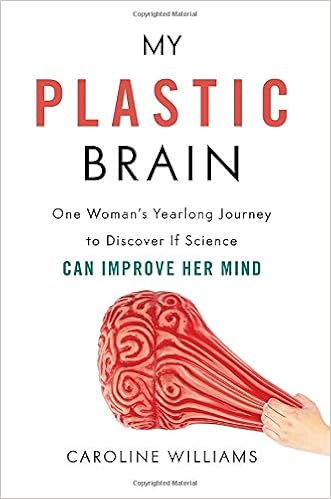
My Plastic Brain by Caroline Williams

From my mailbox:

My Plastic Brain: One Woman's Yearlong Journey to Discover If Science Can Improve Her Mind by Caroline Williams.

Amazon
Barnes and Noble

Author's Web site

From Kirkus Reviews:

"Readers hoping to improve their own cognitive abilities may feel a bit of a letdown by the author’s old-fashioned, down-to-earth advice: exercise your body, preferably outdoors, learn mindful meditation but also allow your mind to wander, engage in a mentally challenging hobby, and pick the skill you want to improve and practice it in real life."

Valar morghulis.

Monday, March 12, 2018

When the Statue of Liberty Gets Sea Walls

Last night I started watching The Expanse on Amazon Prime. It's been really good scifi so far, and has that nitty-gritty view of future space travel, more Firefly than Star Trek, but even grittier. It's set 200 years in the future, and in an early episode there was this short cut of the Statue of Liberty, with sea walls due to (presumably) global warming:


Another good idea (for the story, at least) was "gravity torture," where those who grew up off-Earth in a lower gravitational environment are tortured by being hung in Earth's gravity for hours:


In Kim Stanley Robinson's Mars Trilogy, kids born on Mars (where g = 38% of that of Earth) eventually become significantly taller than Earthlings.

I appreciate when writers think about the little things and subtly put them in their stories. It's fun to notice them. The Expanse does this very well, so far.

Sunday, March 11, 2018

Question About My Blog's Appearance

When you read this blog, is the page too wide for your screen?

Do you have to scroll right in order to see what's beyond the post itself -- the "About Me" module, "Blog Archive," "Good Links," etc.?

I do. So I'm wondering if everyone has the same problem. Other blogspot blogs read fine in my browser.

Thanks.

Thursday, March 01, 2018

Equations That Changed the World

A few years ago, mathematician Ian Stewart published a book titled 17 Equations That Changed The World. It's an interesting list:


I would go beyond these 17 and add: 
  • 1+1=2, which some unknown someone realized long ago was profound and incredibly useful. The logical proof of this assertion, though, didn't come until Bertrand Russell and Alfred North Whitehead three-volume Principia Mathematica. It's a crazy book -- the text looks almost alien or elvish, and it took them several hundred pages of work before they could prove that 1+1=2. Russel said his work on this book "had actually damaged his brain." Here's an interesting discussion of the Principia Mathematica from NPR in 2010.
  • Newton's second law of motion, F=ma (really, F=dp/dt, the time rate of change of momentum).
  • Planck's Law of radiation (probably).
  • The Lagrangian of quantum electrodynamics, because it changed how quantum physics was done ever afterward.
  • Einstein's equations of general relativity, because they changed our view and understanding of the universe, and for their sheer elegance and sophistication. 
You?

Tuesday, February 27, 2018

Idiocy from Ed Berry, PhD

What can you even do when climate deniers won't agree to the basic rules of arithmetic??

Ed Berry is a physicist who earned his PhD back in the Mesozoic era. From Caltech, no less. He now lives in Montana as a mountain man, battling long-horned sheep for food, coming into town once a year for saltpeter and a ballot.

Ed is a hard core climate denier. (And, naturally, a hard core Trump supporter.) So hard core he doesn't care when he makes basic, boneheaded mistakes -- because, you know, one never admit error when a bear is charging at you, or someone who understands the science.

Q: How much has atmospheric CO2 increased since the pre-industrial era?

A: That's an easy calculation, right?

pct chg = change/initial_amount = (408 ppm - 280 ppm)/280 ppm = 46%.

That's simple, clearly.... But not in Ed's denier-land. This is from Ed's blog:


30%?? Whoa.... That's just a dumb arithmetic error. It comes from calculating

change/final_amount = (408 ppm - 280 ppm)/408 ppm = 31%

which is obviously NOT how to calculate a percentage change. You and I learned this in 5th or 6th grade. So did Ed. It's a trivial, arithmetic error.

But one that mountain men will not admit to. Ed is so much of an uber denier that he can't even admit to a simple arithmetic error, can't say, Oops!, you're right, let me fix this and go on.

Now, what can you do when a denier won't accept arithmetic?? I have no idea.

It's all part of Ed's Big Misunderstanding -- he writes, "Why human CO2 does not change climate." He's so sure of this, of course, just as he's sure that the increase in atmospheric CO2 is 30%, even though every 6th grader knows better. He's submitted a paper somewhere (he won't say where), and is proud that after 4 months it hasn't yet been rejected. Remarkable!

Sorry, but I don't accept PhDs in physics misunderstanding the basic science behind global warming -- the Earth emits infrared radiation, and the atmospheric GHGs absorb it. Rejecting that is bad enough. But claiming that our HUGE emissions of CO2 aren't piling up in the atmosphere -- somewhere -- that's is just, I'm sorry, pure stupidity. Dumb. Ignorant. Idiotic.

But what can you do when deniers won't accept the basic rules of arithmetic? Where do you even start?? Beats me....

Thursday, February 22, 2018

Fulgarite - When Lightening Strikes Sand


Via National Geographic

Obamacare Has Bent the Cost Curve


Data:
monthly health care costs - Altarum Institute
monthly inflation: Fred CPI-U

That Arctic Has Been Astonishingly Warm

This is an astonishing graph:


The Arctic is currently about 17°C (31°F) degrees above normal. The baseline (green line) is the 1958-2002 average. 

If that were happening where I live, today's high would have been 86°F. Normal high (1981-2010) for Salem, Oregon today is 53°F.

Reflecting this, Arctic sea ice has already reached a record low for the year, 2.5% below last year's record low. 

Saturday, February 17, 2018

Cool Integral

From KarlMagnus Petersson‏ on Twitter:


In the same way, you can show (I think) that


which is also cool, but not as cool, since "3" is not as cool as "e."

Note: 1/3 < 1/e. This makes sense, since for 0 < x <1, sqrt(x) < cuberoot(x) < fourthroot(x), etc.

Note II: Speaking of e, one of my best friends, a colleague in graduate school (we had the same advisor, and have gotten even closer since), once wrote a paper that contained the number e^e, which I think is about the coolest thing ever published in physics. I wrote about it here for Physics World.

Wednesday, February 07, 2018

Global Warming in Ursula Le Guin's 1969 Novel "The Left Hand of Darkness"

The science fiction writer Ursula Le Guin recently died (she lived in Portland, Oregon for decades), and since I hadn't read anything by her I thought I better get started. So I picked The Left Hand of Darkness, her breakthrough book published in 1969. She was on the ball, because even then she knew about CO2 and global warming. Here she writes about her fictional planet of Gethen.
Eskichwe rem ir Her hypothesized that the volcanic activity in N.W. Orgoreyn and the Archipelago has been increasing during the last ten or twenty millennia, and presages the end of the Ice, or at least a recession of it and an interglacial period. CO2 released by the volcanoes into the atmosphere will in time serve as an insulator, holding in the longwave heat-energy reflected from the earth, while permitting direct solar heat to enter undiminished. The average world temperature, he says, would in the end be raised some thirty degrees, till it attains 72°. I am glad I shall not be present. Ai says that similar theories have been propounded by Terran scholars to explain the still incomplete recession of their last Age of Ice. All such theories remain largely irrefutable and unprovable; no one knows certainly why the ice comes, why it goes. The Snow of Ignorance remains untrodden.
It's interesting that she associated CO2 warming with the Ice Ages, as science did for a good while back then, I think, while it grappled with understanding the Pleistocene.

More Humor from SpaceX

(Besides the orbiting red roadster, I mean)

Saturday, February 03, 2018

"And Yet it Warms"

I think this is hilarious:


Backstory (which everyone should know already).