I only heard Stephen Schneider speak once, about two years ago at a conference for journalists on climate science, in Portland. I mostly remember his sense of impatience (and a bit of anger) at the world's continuing doubts about a human influence on climate.
Here's one of the last interviews from him, from an alumni mag at Stanford. Schneider was extremely concerned about the recent tone of the debate over climate science, especially since ClimateGate -- in fact, he worried that a climate scientists might end up murdered. (Personally, I don't think this is an idle concern.)
His voice, and his frustration, will be missed.
Monday, July 19, 2010

Carl Safina on the Gulf Disaster
Here's a very interesting TED talk by Carl Safina from the Blue Ocean Institute at Stony Brook. He especially gets going in the last 5 minutes, where he talks about how the roots of this disaster. Like the other crises our country is facing, it comes from the corporate favoritism and harmful deregulation during the Bush administration. But all 20 minutes are well worth watching:
Breaking News: Stephen Schneider has died

Oh my gosh, famed climatologist Stephen Schneider has died....
Here is the text of the press release from Stanford:
Stanford's Stephen Schneider, a leading climate expert, dead at 65
Stephen H. Schneider, a Stanford biology professor and a leading researcher in climate change, has died.
Schneider was flying from a science meeting in Stockholm, Sweden, to London today, July 19, when he apparently suffered a heart attack. He was 65.
He had been at Stanford University since 1992 and was a lead author among scientists on the United Nations' Intergovernmental Panel on Climate Change, which shared the 2007 Nobel Peace Prize with former Vice President Al Gore.
"Steve, more than anything, whether you agreed with him or not, forced us to confront this real possibility of climate change," said his colleague at Stanford's Woods Institute for the Environment, Jeff Koseff.
Schneider was influential in the public debate over climate change and wrote a book, Science as a Contact Sport: Inside the Battle to Save Earth's Climate, about his experiences. He also wrote a book about his battle with leukemia, Patient from Hell
.
He had been a White House consultant in the Nixon, Carter, Reagan, George H.W. Bush, Clinton, George W. Bush and Obama administrations.
He and Terry Root, his wife and collaborator, jointly won the 2003 National Conservation Achievement Award from the National Wildlife Federation.
Schneider received his PhD in mechanical engineering and plasma physics from Columbia University in 1971. In 1975, he founded the journal Climatic Change. In 1992, he won a MacArthur Fellowship.
Arrangements for a memorial service are pending.
Related information:
Stephen Schneider's ClimateChange.Net website:
http://stephenschneider.stanford.edu/
And If Emissions Aren't Capped, Senator?
The new Senator from West Virginia, Carte Goodwin (a Democrat) says he won't vote for the current House legislation capping greenhouse gas emissions because
Is that too much to ask?
"From what I’ve seen, they are simply not right for West Virginia," Goodwin said at a press conference.... "I will not support any piece of legislation that threatens any West Virginia job or any West Virginia family."Just once I'd like to see a reporter followup such a statement with the simple question, "How will West Virginia families be harmed if the legislation doesn't pass?"
Is that too much to ask?
Saturday, July 17, 2010
Ask a Nobel Laureate -- David Gross
Here's an interesting feature on YouTube: physicist (and Nobel Laureate) David Gross answers a range of questions submitted from viewers:

Thursday, July 15, 2010
Why I Might Quit Reporting on Climate
Believe it or not, I was once a skeptic about man-caused climate change.
Back around 1998-99, I often wrote to an ultra-progressive, liberal list whose name was something like positive-living. (I have searched for a half-hour, but can't find it on Google.) As you might expect, many of the participant were anti-GM foods, anti-western society, and firmly believed in anthropogenic climate change.
I had some fun debating them. At that point I didn't buy the case for AGW. But, in truth, I didn't know anything about it.
That fall I moved from Gilford, NH to Ogunquit, ME, and I started to read a lot of books. I read The Heat is On by Ross Gelbspan, and Spencer Weart's The Discovery of Global Warming and several other books, and I learned what people were concerned about.
I started reading papers and talking to scientists and reporting on the topic, mostly for Scientific American: Soon & Baliunas, Michael Mann, and several other stories on Sci Am, other outlets, and my blog.
That was fun. But that was then.
The scientific case for anthropogenic climate change has been proven to the extent it needs to be -- i.e. that society needs to take it very, very seriously and that it ought to change its methods of energy production.
Being inherently selfish human beings, the world won't undertake this change, of course. But so what?
So what's left?
Really, I have little interest in reporting on Christopher Monckton's 466 questions to John Abraham, or even worse, his absurd, cowardly and utterly transparent demand that Abraham be disciplined by his institution. Monckton has clearly been proven wrong (and not just wrong, but now he has revealed himself as a clown) and is just in this for the celebrity. He will apparently do anything to keep his name in the press/blogs.
Sometimes I think that's all I should do -- respond with prejudice and keep my name in the links and build up the hits. Crash conferences and write demanding emails because you won't (or can't) do the legitimate, hard-core work that science requires.
But this is getting silly and tiring, almost as stupid as the travails of Bristol Palin and Levi Johnston or whatever the Kardashian sluts do to keep in the news.
So what to do?
There are a lot of really important science news stories out there, it seems to me. The lack of regulation of new nanotechnologies. And especially what's coming to light about the role of environmental chemicals and their impact on our ecology and (probably) our very own species.
The enormous and embarrassing question in physics that the public has not yet grasped: scientists do not know what 95% of the Universe is made of. What could possibly be worse, from a scientific point of view? Or more interesting?
So while climate science is interesting, I'm not sure it's any longer that relevant, news-wise. It's a done deal. There's no longer any scientific basis for criticizing it, just personal gossip type stuff. Kind of desperate, and kind of boring.
david.appell@gmail.com
Stuff
I'm busy working, and also taking care of a (now) 6-week old kitten, which is more work than you might imagine. Especially when he prefers to be glued to you (almost literally).
Anyway, here is some interesting stuff I've come across:
Anyway, here is some interesting stuff I've come across:
- Wimp.com has some of the most original video findings out there. This one of dinosaur models, from Australia (I think), is quite amazing.
- I did not know that otters must be taught how to swim. The mother otter leaves them essentially no choice.
- Wash Post op-ed: "The energy required to air-condition American homes and retail spaces had doubled since the early 1990s."
Saturday, July 10, 2010
Citizen Journalism Doesn't Cut It
A new study has shown the obvious: "citizen journalism" is, well, crap.
That is to say, not worth very much at all.
These are the sad economics of the blogosphere. So where are things supposed to go, with secondary newspapers dying and blogs being economically unable to take their place.
Huh? (I'm just as confused as you are.
That is to say, not worth very much at all.
COLUMBIA, Mo. ¬— A team of researchers from the University of Missouri School of Journalism and two other schools say that even the top 60 citizen websites and bloggers are not filling the information shortfall that has resulted from cutbacks in traditional media.Hey, if I could make a mere $1500/mth of this blog, by reporting in the best, most objective manner I know how.... I would offer it. But I can't imagine that 150 readers would pay $10/mth, or even that 1500 readers would pay $12/yr.
"While many of the blogs and citizen journalism sites have done very interesting and positive things, they are not even close to providing the level of coverage that even financially stressed news organizations do today," said Margaret Duffy, associate professor at the Missouri School of Journalism. "Not only do these blogs and websites lack the staff to adequately cover stories, but most citizen journalism managers do not have the financial resources and business experience to make their websites viable over time."
Duffy collaborated with Esther Thorson, associate dean for graduate studies at the MU School of Journalism, and Mi Jangh, doctoral candidate at MU, along with others at Michigan State and North Carolina. The Pew and Knight foundations underwrote the research.
The researchers identified a number of factors including how much linking each website included, how much public participation they allowed or invited, how frequently news and content were updated, and whether the citizen websites provided contact information for the public.
Duffy says it is important to understand how citizen journalism and legacy news organizations co-exist. She believes it is critical that democracy have an effective journalistic presence. With many newspapers and broadcast news outlets struggling financially, she is concerned about the future of journalism.
"A strong democracy depends on vibrant, robust news coverage with informed citizens and voting public," Duffy said. "If news media have to cut back and are unable to provide the same level of coverage for their communities that they did in the past, citizen journalism may need to step in. That is why it is important to examine what these websites need to do to improve and survive.
These are the sad economics of the blogosphere. So where are things supposed to go, with secondary newspapers dying and blogs being economically unable to take their place.
Huh? (I'm just as confused as you are.
Seed Magazine
Freelance writer Gaia Vince presents an amazing (and, it seems to me, believable) claim about Seed Magazine -- that they killed her column on the Bhopol chemical disaster because it was critical of Dow Chemical (parent company of that which caused the 1984 explosion), who was about to become one of Seed's advertisers.
This is, of course, the most serious charge that can be leveled against a magazine.
Vince's piece eventually ran on the BBC.
It takes a lot of guts for a freelancer to do this kind of exposure, which necessarily burns bridges and endangers future bridges. And it's an enormous black eye for Seed, the subscription-cancelling kind. I'm amazed anyone in their editorial department would have even admitted it to her.
No response from Seed yet as far as I know....
Oliver, Day 3
Thanks very much for all the advice about taking care of my 5-week old kitten, Oliver (was "Anton," but that misfired; he also goes by "Junior"). It's been very helpful. He's definitely clingy and prefers to stay as close to me as possible. He's eating canned kitten food and special kitten's milk, and more or less goes when I put him in the litter box, except for one accident on the kitchen floor. But accidents at his age are tiny.
The first morning after he came it took 3 hours to find him, crammed underneath a piece of furniture. My postal scale records his weight as 12 oz.
My other cat, Sophie, is only 14 months old, but has completely changed character since Jr's arrival. She herself had become very, very close to me in just the 10 days since Eli's death, but since Oliver has arrived she is now aloof and, I guess, confused. The first 24 hrs she hissed at him. Now she sniffs him for a bit, but then leaves him alone. I'm surprised, since I think of her as almost a kitten still herself and a very friendly one at that. She seems confused and I guess I can't blame her. I imagine that in a few months they will both be chasing each other like idiots, but this seems like a big change for her, especially following Eli's death. (She freaked out the other day when I finally picked up his bed to put it in the closet.)
Wouldn't We All?
Asked once for his [Seve Ballesteros'] thoughts on how courses should be changed, he said with a smile: “I’d like to see the fairways more narrow. Then everyone would have to play from the rough. Not just me.” -- NY Times.
Thursday, July 08, 2010
Meet Oliver
What can I say -- I am a sucker for things that need a home. So meet Anton Oliver -- only 5 weeks old:

PS: I've never cared for a kitten less than 8 weeks old. So any advice would be welcome.
UPDATE: It seems his name was meant to be Oliver.

PS: I've never cared for a kitten less than 8 weeks old. So any advice would be welcome.
UPDATE: It seems his name was meant to be Oliver.
More on PepsiCo and Scienceblogs
The more I think about it, the more I think the PepsiCo/Scienceblogs episode was a great opportunity missed.
Yes, like many I'm concerned about the corporate infestation of government and of society. But the thing is, corporations like PepsiCo go to great lengths to isolate themselves and minimize (if not eliminate entirely) meaningful rebuttal.
Here was a corporation about to initiate daily conversations (and that's what blogs are) with readers who can write back for all to see. Commenters, other bloggers, and journalists could evaluate and counter PepsiCo's claims in near-real time, in the way only the Web/blogosphere can accomplish. They could cite the scientific literature to show how/if they were wrong, unlike any other medium possible.
Instead of merely be passively bombarded by PepsiCo's innumerable television commercials, here you could talk back and call their bluff, if appropriate. Readers could point out their factual and scientific errors, or call their point of view into question, or question their entire foundation.
Heck, done right, PepsiCo would have themselves withdrawn their blog in a few weeks, shocked at the implications of truly free speech.
Instead they are hounded out before they even said anything, and prominent science writers quit in a huff because sharing a forum with such cretins was beneath them.
The PepsiCo Blog
UPDATE: Scienceblogs has quickly caved and removed Food Frontiers from their lineup.
The science blogosphere is up in arms about Scienceblog's (a division of Seed magazine) decision to introduce a blog written by PepsiCo ("Food Frontiers") and its scientists. Some Scienceblogggers are resigning (David Dobbs and Rebecca Skloot -- Carl Zimmer is keeping a rundown here), and I've seen calls for the National Association of Science Writers to write Scienceblogs a letter expressing their displeasure.
Let's note: The PepsiCo blog hasn't even written anything yet, besides a simple introduction.
This suppression of speech not yet even expressed is disappointing, merely because a mob shouted it down. Imagine if this had happened in, say, climate science, where perhaps a Limbaugh- or ClimateDepot-inspired mob floods federal agencies and science organizations until a certain grant is revoked or a speaking invitation taken back.
It would have been far better to keep the blog up and let commenters chew it to pieces (as they would), if the science really was bad.
Intolerance and prior suppression of speech is unacceptable no matter where it happens.
Wednesday, July 07, 2010
Zweig Recollects
George Zweig, who as a graduate student independently proposed the idea of new particles inside protons and neutrons, has published an interesting paper recalling those years, titled "Memories of Murray and the Quark Model."
"Murray" is, of course, Murray Gell-Mann, who proposed the same idea independently, calling the particles "quarks." (Zweig called them "aces," because he originally thought there should be 4 of them. He says he would have called them "dice" if he'd known there should be six.) It's interesting to read about both their struggles trying to figure out if quarks were real, or just abstract accounting devices to account for the properties of exotic baryons.
Zweig also tells about a brutal Caltech seminar where Feynman and Gell-Mann sat in the front row and completely intimidated the speaker, who was a stutter. Gell-Mann rudely read a newspaper and waited for Feynman to tell him if anything important was going on. Feynman pressed the speaker again and again, which only made him more anxious and worsened his stuttering, until Feynman finally stormed out in a huff. Pretty obnoxious, actually.
Short Films Not Easily Forgotten


Tuesday, July 06, 2010
Not Encouraging:
Science magazine:
To look for unexpected influences on voting habits, researchers recently compiled the individual county outcomes of presidential, gubernatorial, and senatorial elections between 1964 and 2008 and compared them with local college football results during the same period. They found that a home team win in the 2 weeks before Election Day gave an incumbent politician a 1.05% to 1.47% bump in the polls. Areas with ardent football fans were even more susceptible to this effect. Where local game attendance is among the top 20 in the nation, incumbents gained an additional 2.42 points, according to a paper published online today in the Proceedings of the National Academy of Sciences. The researchers suspect that this effect comes from gleeful fans selectively remembering favorable policy decisions and sticking with the status quo.

Monday, July 05, 2010

Saturday, July 03, 2010
Britain Wants to Reduce Air Travel
The British government has announced that they will not build a third runway at London's Heathrow Airport, and it's two secondary airports, citing concerns about Briton's wanton travel and the country's GHG emissions.
This is a courageous stand, if perhaps misguided. But it's tricky.
To an observer of the American political scene, it's beyond astonishing that any politician would take a stand against commercial growth in the name of GHG cutbacks. Simply unbelievable.
No one here would ever take such a published climate plan so seriously.
People everywhere, including Britain, seem to have decided that they're not going to lose any weight anyhow, so they might as well eat all the creamy desserts they want.
But I am not convinced that asceticism is the path towards solving the problem of anthropogenic climate change.
Look, people need to fly. People want to fly, to travel, to explore the world. Instead of denying them that ability, which I suspect is even more ingrained in Europeans than Americans, we need to find a way of flying that does not generate GHGs, instead of simply denying people's ability to travel.
This is, admittedly difficult. Of all transportation sector technologies, air travel seems to be the most dependent on fossil fuels, i.e. the technology that seems unreplacable by non-fossil fuel sources.
So what to do, besides more research...? Britian's decision is only likely to alienate their citizens, who might now just take the Chunnel to Calais and fly from there. That might even be a net increase in GHG emissions.
I just need to repeat: the answer to this immense problems is not austerity. It is new technologies.
This is a courageous stand, if perhaps misguided. But it's tricky.
The government decided that enabling more flying was incompatible with Britain’s oft-stated goal of curbing emissions. Britons have become accustomed to easy, frequent flying — jetting off to weekend homes in Spain and bachelor parties in Prague — as England has become a hub for low-cost airlines. The country’s 2008 Climate Change Act requires it to reduce emissions by at least 34 percent by 2020 from levels reached in 1990.
“The emissions were a significant factor” in the decision to cancel the runway-building plans, Teresa Villiers, Britain’s minister of state for transport, said in an interview. “The 220,000 or so flights that might well come with a third runway would make it difficult to meet the targets we’d set for ourselves.” She said that local environmental concerns like noise and pollution around Heathrow also weighed into the decision.
To an observer of the American political scene, it's beyond astonishing that any politician would take a stand against commercial growth in the name of GHG cutbacks. Simply unbelievable.
No one here would ever take such a published climate plan so seriously.
People everywhere, including Britain, seem to have decided that they're not going to lose any weight anyhow, so they might as well eat all the creamy desserts they want.
But I am not convinced that asceticism is the path towards solving the problem of anthropogenic climate change.
Look, people need to fly. People want to fly, to travel, to explore the world. Instead of denying them that ability, which I suspect is even more ingrained in Europeans than Americans, we need to find a way of flying that does not generate GHGs, instead of simply denying people's ability to travel.
This is, admittedly difficult. Of all transportation sector technologies, air travel seems to be the most dependent on fossil fuels, i.e. the technology that seems unreplacable by non-fossil fuel sources.
So what to do, besides more research...? Britian's decision is only likely to alienate their citizens, who might now just take the Chunnel to Calais and fly from there. That might even be a net increase in GHG emissions.
I just need to repeat: the answer to this immense problems is not austerity. It is new technologies.
Science Shows on TV
There seem to be a great many science shows on cable TV these days. My only complaint is that too many of them focus on the same old topics, especially cosmology and astrophysics. You can almost guess the sequence of their series: the Big Bang. The Solar System. Comets. Galaxies. Black Holes.... Maybe they get a little esoteric and cover Interstellar Travel, Time Travel, Parallel Universes.... It's just that there are a great number of other science topics that seem a bit neglected, especially in biology and genetics. (Or am I missing them?) I guess graphics of planetary collisions are more thrilling than those of epigenetics.
Anyway, the graphics on these shows have really improved a great deal in recent years. How the Universe Works does an especially good job, except, I'm sorry, but while Mike Rowe is a great host for a show like Dirty Jobs, he doesn't make a good narrator for science shows. Just not his image. (PS: Did you know he was once an opera singer?)
Anyway, one little factoid I learned from their show on the solar system (Episode 7) was about the role of Jupiter in protecting the Earth from comets and asteroids. Without Jupiter, the show said, the impact rate of asteroids on the Earth would be about 1000 times what we see today.
Thursday, July 01, 2010
The Evil TV
Everyone complains about how much TV kids watch -- but it turns out that the elderly watch even more of the damn thing.
Sometimes I think you can date the beginning of the decline of civilization (which I'd put at 1955 to 1975) as due to television, and how it ruined neighborhoods and families -- pulling people indoors, away from their porches and their neighbors, and even away from their family members. People haven't involved to really care or understand what is going on across the country or across the world -- we have lost a sense of community and television directly contributes to that.
Adults over 65 reported spending three times more of their waking hours watching TV than did younger adults. Older adults did not seem to experience the same “stress buffering” effects that younger adults did from watching TV, and TV use among older adults – unlike time spent on other leisure activities, such as socializing or physical exercise – was related to lower life satisfaction.I wonder how these number would suss out if you included total screen time, or at least time(TV+online videos).
Data from other studies indicate that the average American household spends 4.5 hours watching TV per day and, in those over age 65, about 25% percent of their time is spent watching TV.
Sometimes I think you can date the beginning of the decline of civilization (which I'd put at 1955 to 1975) as due to television, and how it ruined neighborhoods and families -- pulling people indoors, away from their porches and their neighbors, and even away from their family members. People haven't involved to really care or understand what is going on across the country or across the world -- we have lost a sense of community and television directly contributes to that.
Twilight, Vampires, and all That

Elena Kagan was asked about the movie Twilight in her (utterly vacuous) confirmation hearing. I have never gotten the vampire thing -- it bores me completely. Why are they so interesting to so many people and the subject of so many movies? And why is the idea often mixed up with romance?
Wednesday, June 30, 2010
The Reality of Handguns
Number of handgun-related killings by private U.S. citizens that were deemed justifiable homicides:
-- less than 2.5% over the years 2004-2008.
Source: Julie Cantor, New England Journal of Medicine, June 30, 2010, in turn taken from Crime in the United States, 2008. Washington, DC: Department of Justice, Federal Bureau of Investigation, 2009. (Accessed June 30, 2010, at http://www.fbi.gov/ucr/cius2008/offenses/expanded_information/homicide.html.)
Tuesday, June 29, 2010
On Auditors
Bart Verheggen (http://ourchangingclimate.wordpress.com) wrote:
>> Citizen science as the new skepticism?
> Over at Keith’s, I got engaged in a discussion with Judith Curry and
> others about the well educated skeptics who self identify as ”auditors”
> of climate science. She claims that
I don't agree with this at all. When Steve McIntyre and other "auditors" spend as much time (or even any time) "auditing" the many fallacious claims in climate science as they do those of Mann (esp) et al, then I'll begin to believe it. But I don't see it at all.
>> Citizen science as the new skepticism?
> Over at Keith’s, I got engaged in a discussion with Judith Curry and
> others about the well educated skeptics who self identify as ”auditors”
> of climate science. She claims that
this group is definitely interested in moving the science forward.
I don't agree with this at all. When Steve McIntyre and other "auditors" spend as much time (or even any time) "auditing" the many fallacious claims in climate science as they do those of Mann (esp) et al, then I'll begin to believe it. But I don't see it at all.

Standing Up to Power
Some video technician/nerd is having himself some fun at the World Cup:
"The video operators are under strict instructions from FIFA not to replay controversial calls on the stadium screens, but they have done so on numerous occasions during this tournament."
-- NY Times
Sunday, June 27, 2010
How About More Officials?
In the wake of the horrendous call in today's England-Germany match, everyone is talking about instituting "goal-line technology," by which they mean (I think) some kind of video camera/computer setup similar to that at Wimbledon. But how about this: have more officials on the field!
There are only two referees on the field, which is huge (64 m x 100 m). By contrast, an American football field is 53 1/3 yd x 100 yd (48.8 m x 91.4 m), or only 70% as big. For important matches why doesn't FIFA include a couple of extra referees, especially one positioned near each goal?
It must be very difficult to be a soccer referee and be running up and down the field, expected to make important calls while you're doing it. Even the Americans put two extra umpires on the field for playoff and World Series games.
Flight Through a Mandelbox
A Mandelbox is a particular kind of fractal.
You probably have heard about fractals -- "self-similar" objects where, no matter how closely you look at it, it still looks the same. The simplest is perhaps the Koch curve (although this picture is only 3-rd order and how not been divided infinitely many times, as a real fractal is):

Fractals were discovered by Benoit Mandelbrot sometime in the 1970s, and they have truly become useful in science. (I heard Mandelbrot speak a few times, and he is one of the most arrogant people I've ever encountered. Maybe only Lubos Motl tops him.)
Anyway, a famous fractal is the "Mandelbox" - the generation instructions are here
2d Mandelbox fold from Tom Lowe on Vimeo.
Some clever people have created various videos form the point of view of somone flying through a 3-dimensional Mandelbox, and they're pretty amazing:
This one might be the best:
Via: Wimp.com
You probably have heard about fractals -- "self-similar" objects where, no matter how closely you look at it, it still looks the same. The simplest is perhaps the Koch curve (although this picture is only 3-rd order and how not been divided infinitely many times, as a real fractal is):
Fractals were discovered by Benoit Mandelbrot sometime in the 1970s, and they have truly become useful in science. (I heard Mandelbrot speak a few times, and he is one of the most arrogant people I've ever encountered. Maybe only Lubos Motl tops him.)
Anyway, a famous fractal is the "Mandelbox" - the generation instructions are here
2d Mandelbox fold from Tom Lowe on Vimeo.
Some clever people have created various videos form the point of view of somone flying through a 3-dimensional Mandelbox, and they're pretty amazing:
This one might be the best:
Via: Wimp.com
Saturday, June 26, 2010
Hell
From coverage of the Evolution 2010 conference in Portland:
A reception featuring local wine and beer preceded a public lecture by Sean B. Carroll, winner of the second annual Stephen Jay Gould Prize.
Acknowledging the embattled times evolution faces, Carroll got big laughs when, asking non-biologists to raise their hands, he quipped, “You’re all going to hell.”
“The good news,” he continued, “is hell is full of smart, interesting people."
Friday, June 25, 2010
The Stupid DC Pundits
Do all the young little Journolist writers realize that all their self-protective, self-indulgent ego-stroking is viewed by the rest of the country as just as tawdry as the corruption of our government by corporations and lobbyists?
That, indeed, the rest of the country recognizes that all these little worms are doing is lining up to try and get their little slice of the power pie, with all its compromises and shenanigans, via mentions in a few local power blogs? To be the next Charles Krauthammer or George Will, as if these guys -- who supposedly have it made -- matter?
It's difficult to see how many words have now been expended on the terrible story of Dave Wiegel, who as far as I can tell has not ever contributed one meaningful idea to the national debate -- or, really, has done more than danced at some other poseur's wedding.
Small wonder that the intellectual foundations of our country are collapsing....
What Evidence Would Support AGW?
A few days ago I asked Roy Spencer, the well-known AGW-skeptical scientist at the University of Alabama at Huntsville who keeps the UAH their satellite records on temperature, what would convince him of a human influence on climate.
Here's his response -- quoted with permission -- not exactly reassuring:
Here's his response -- quoted with permission -- not exactly reassuring:
There is no unique fingerprint of AGW. Since it is a "radiative forcing" (radiative energy imbalance of the climate system), it cannot be distinguished from circulation-induced changes such as a decrease in albedo of the Earth (e.g. a decrease in cloud cover) or an increase in atmospheric water vapor or high cloud cover
The AGW crowd either do not believe these changes occur, or they do not know enough to realize that is what they are implicitly assuming.
Some will claim stratospheric cooling IS a signature of increasing CO2, which indeed is possible, but the stratosphere is much simpler in behavior than the troposphere, where clouds and other moist processes have such a huge influence.
So, I do not believe there is any way to recognize AGW...short of global temperatures increasing another 5 deg. C. That would probably make even me a believer. :-)
It has occurred to me that it is possible this debate -- and all the ancillary junk that goes along with it -- will never end. Think about it: suppose we drastically refurbish society and get all of our future energy from renewable, non-carbon sources. It's the year 2080 and temperatures are the same as they are today.
Advocates will argue that it was the switch to non-C energy sources that saved the day. Skeptics will argue that CO2 was not such a big problem all along and we spend $5T for nothing.
Hopefully 2080's science will be advanced enough to distinguish between these two scenarios. But I'm not sure that's a given.
(PS: If you're reading this in the year 2080 AD, PLEASE leave a comment.)
Stuff
Some stuff too small for their own post:
- there is a Cat 5 hurricane loose in the Pacific Ocean -- Hurricane Celia. The National Hurricane Center calls it a "very impressive hurricane," but it's expected to significantly weaken soon. Besides, it's very unlikely to hit the U.S., so the media here won't care about it at all.
- but don't worry, there is a tropical storm that could add drama to the story in the Gulf
- a financial analyst has estimated the cost of cleaning up the Gulf spill at $63B. Unfortunately, most of that cost will be eaten by sea birds and other aquatic life.
- Recommended movie: The Savages (just try not to fall in love with Laura Linney)
- Unrecommended movie: The Quiet Earth (means well, tries hard, but is boring)
Thursday, June 24, 2010
The "Blacklist" Paper
Two years ago I heard Stephen Schneider give a talk at a journalism seminar in Portland. He was clearly frustrated at the state of the climate debate, and was essentially dismissive of any notion that AGW wasn't true.
I think I can understand some of where he's coming from. If you read his 1990 book Global Warming: Are We Entering the Greenhouse Century? (and I recommend it, if you can find it in paperback), you'll be astonished to see how much was already known about man's influence on the climate in the 1980s -- clearly enough to even then take the subject very seriously, viz., enough knowledge to take action.
And in 20 years no action at all has been taken. Not only that, but now the entire debate has devolved into a nasty pit unlike anything ever seen in science, and all kinds of clowns and professional prevaricators have come out to openly mock honest, hard-working scientists and even threaten them (as Morano implicitedly does by publishing their email addresses). I hate to say it but you can almost look down this trend and see something truly tragic happening at some point.
I'm sure lots of scientists are frustrated. But this PNAS paper seems unnecessary. Science and scientists have done very well over the centuries by taking the high road, and while I know scientists are human and naturally express their frustration in private, it doesn't belong in a scientific journal, especially one like PNAS. You can't simply chalk up expertise based on number of publications, and who is to say what the science will ultimately be, and analyses like this one never capture all the subtleties of people's positions on a diverse, complex subject, and you just end up making things worse. Now there is one more ancillary topic to argue about instead of the science, which is the very nutrient the pro prevs exist upon.
I think I can understand some of where he's coming from. If you read his 1990 book Global Warming: Are We Entering the Greenhouse Century?
(and I recommend it, if you can find it in paperback), you'll be astonished to see how much was already known about man's influence on the climate in the 1980s -- clearly enough to even then take the subject very seriously, viz., enough knowledge to take action.And in 20 years no action at all has been taken. Not only that, but now the entire debate has devolved into a nasty pit unlike anything ever seen in science, and all kinds of clowns and professional prevaricators have come out to openly mock honest, hard-working scientists and even threaten them (as Morano implicitedly does by publishing their email addresses). I hate to say it but you can almost look down this trend and see something truly tragic happening at some point.
I'm sure lots of scientists are frustrated. But this PNAS paper seems unnecessary. Science and scientists have done very well over the centuries by taking the high road, and while I know scientists are human and naturally express their frustration in private, it doesn't belong in a scientific journal, especially one like PNAS. You can't simply chalk up expertise based on number of publications, and who is to say what the science will ultimately be, and analyses like this one never capture all the subtleties of people's positions on a diverse, complex subject, and you just end up making things worse. Now there is one more ancillary topic to argue about instead of the science, which is the very nutrient the pro prevs exist upon.
The Police Reports on Al Gore
You know you want to read them. Here they are.
Gore apparently went by the name "Mr. Stone" when he checked into the Hotel Lucia in Portland. I guess that's better than "Mr. Earth."
Gore apparently went by the name "Mr. Stone" when he checked into the Hotel Lucia in Portland. I guess that's better than "Mr. Earth."
Wednesday, June 23, 2010
Kip Thorne and the Twin Paradox
Here is a beautiful little calculation by Kip Thorne that I just can't resist.
First of all, let me thank Thorne for his massive tomb, Gravitation, which all physicists know as "Misner, Thorne, and Wheeler." Is it the big black book that all physicists tote around for the rest of their lives -- you can often see it behind them when they do on-camera interviews. It's heavy enough to nearly form a black hole of its own.
 If you're a graduate student physics, you have to buy it. It now costs $123, at least on Amazon. I think I got mine for $40, and I still read it a few times a year. Someday I hope to even understand it.
In any case, you all know about the twin paradox: if your twin were to fly away from Earth, while you remained here, he/she would experience time differently than you -- in particular, they would record the length of their trip as much less than yours.
How much less?
Good question. And a complicated one. In particular, your twin would not leave Earth at a constant velocity, but would accelerate (and then decelerate on the turnaround) and so calculations based on special relativity (with that ubiquitous factor of gamma) do not apply.

This assumes your twin accelerates away from Earth at g, then (at the midpoint of her journey) switches to a deceleration of -g. Then they turn around and do the same on the way home.
Here, the twin's age is T_M. Your age is T_F.
Thorne gives a nice plot of this calculation here. Here's the bottom line, where "Florence" is your twin and "Methuselah" is you, remaining on Earth:
Isn't physics beautiful?
First of all, let me thank Thorne for his massive tomb, Gravitation, which all physicists know as "Misner, Thorne, and Wheeler." Is it the big black book that all physicists tote around for the rest of their lives -- you can often see it behind them when they do on-camera interviews. It's heavy enough to nearly form a black hole of its own.
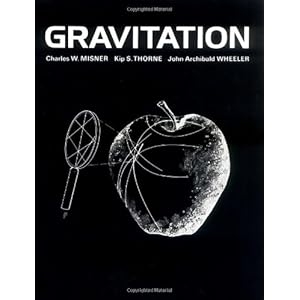 If you're a graduate student physics, you have to buy it. It now costs $123, at least on Amazon. I think I got mine for $40, and I still read it a few times a year. Someday I hope to even understand it.
In any case, you all know about the twin paradox: if your twin were to fly away from Earth, while you remained here, he/she would experience time differently than you -- in particular, they would record the length of their trip as much less than yours.
How much less?
Good question. And a complicated one. In particular, your twin would not leave Earth at a constant velocity, but would accelerate (and then decelerate on the turnaround) and so calculations based on special relativity (with that ubiquitous factor of gamma) do not apply.
But here Thorne gives the results of a nice little calculation that is probably on the qualifying exams of his graduate students:

Here, the twin's age is T_M. Your age is T_F.
Thorne gives a nice plot of this calculation here. Here's the bottom line, where "Florence" is your twin and "Methuselah" is you, remaining on Earth:
If Florence's clocks and aging report a round trip time of 10 years, Methuselah will have aged by 25 years. If Florence aged 30 years, Methuselah will have aged 4,500 years. If Florence aged 88 years, Methuselah will have aged 14 billion years, which is the current age of our Universe! Unfortunately, no known rocket fuel, not even thermonuclear fusion, is capable of producing the sustained multi-year-long acceleration required for such a trip.
Isn't physics beautiful?
Romm's Horrible Advice
I'm still not sure what I think of yesterday's controversial Schneider et al PNAS paper, but I am sure about Joseph Romm's remark that
...it is time for the media to stop listening to, quoting, and enabling those who spread anti-science and anti-scientist disinformation.
Romm can stuff it.
While there is little doubt that humans are influencing today's climate -- even Lindzen, Spencer, Lomborg, and others admit that -- and that our methods of generating energy are, over the time-scale of decades, a huge future crisis -- there are still some very important and legitimate questions about climate science and rational skeptics have a role to play in answering them.
For example: just how much of recent temperature increases are due to man's influence (GHGs + land use changes) and how much a natural or random fluctuation -- is it 2/3rds, or 1/3rd, or what?
In the ten years or so that I've been following and covering climate science, there have been a lot of changes in the state of various questions, in both directions. The overall case for AGW seems stronger (compare the IPCC 4AR to the 2AR), and the Arctic is melting faster than was predicted ten years ago, but there are also issues that have been dialed back as further study was done, such as:
- concerns about the potential overturning of the AMOC and its potential to lead to deep cooling in Europe have been lessened
- the Medievel Warm Period may have been more global than first thought
- AGW's ability to strenghten hurricanes seems to have been dialed back (Emanual, et al)
- what about the impact of decreases in cloud cover? Roy Spencer says today's climate can be explained by a mere 2% decrease in global cloud cover
- it's becoming increasingly clear that nations and societies can't cut CO2 emissions without sacrifices in lifestyle, which no one (understandably) wants to do
US Advances in World Cup
I know I complained about the vuvuzelas, but I think the TV feed has found a way to minimize them. In any case, the US just advanced in the World Cup on a dramatic goal (in extra time!) by Landon Donavan. Pretty exciting.
In fact, the US won their group (ahead even of England).
In fact, the US won their group (ahead even of England).
Monday, June 21, 2010
In Other Sea Level News....
Here's an interesting paper that raises an issue many people haven't thought about: how much water are dams holding back from the sea?
Humans have been building a lot of dams over the last century or so, holding back water that would otherwise be going to the sea (and raising sea levels beyond what's measured).
How much? The authors calculate that dams hold back about 10,800 km3 from running into the sea. As a means of comparison, that's just a bit less than is in Lake Superior (12,000 km3), the world's 3rd largest freshwater lake. (If a cube, it would be 14 miles on each side.)
This dammed water has reduced sea level by 3.0 cm. But, here's where it gets interesting: the weight of the water behind dams lowers land levels near it, which in effect raises the local sea level, by about 0.2 mm/yr, or about 10%.
Source: Fiedler, J. W., and C. P. Conrad, Spatial variability of sea level rise due to water impoundment behind dams, Geophys. Res. Lett. 37, L12603, doi:10.1029/2010GL043462.
Joe Romm and the Deep End
Yet again Joe Romm resorts to extreme catastrophism due to global warming, in Salon:
...sea level rise could hit 4 to 6 feet by century's end and then continue rising a foot or more a decade, until all the land-based ice on the planet is gone and seas are more than 200 feet higher. How will our children's children and their descendants adapt to that?
A foot a decade? For 2 millenia? Where does he possibly get that?
These kind of claims don't help. At all. Except to get you on Fox News (as the liberal target). Which sometimes I think is his major goal.
Friday, June 18, 2010
Goldberg's Skeptical Platitudes
Of all the arguments against dealing with anthropogenic climate change, Jonah Goldberg chooses one of the cheapest:
Of course you can put aside the climate change argument — even if you believe in climate change, America could be in full compliance with Kyoto and then some, and it wouldn't make much of a difference in the amount of CO2 pumped into the world's atmosphere, because the rest of the world won't be switching from fossil fuels any time soon. Meanwhile, as Bjørn Lomborg and others have long argued, there are some far more pressing environmental problems that could use the trillions of dollars that would be thrown away on slightly reducing CO2 emissions by the end of the century (and delaying computer modeled predictions of warming by a few years).
This is an extremely weak argument -- a mere recitation of the age-old Tragedy of the Commons.
First of all, it assumes that the 1997 Kyoto Treaty was intended to be the final word on fixing the climate problem. Of course, it was not, but just a beginning.
Secondly, it assumes the world and its citizens and governments cannot deal with more than more than one problem at once. You never make that assumption in your own life. If you have a heart problem and your roof leaks, you deal with them both -- medications, diet, exercise, and you hire someone to patch the roof.
By Goldberg's argument, one need never pay one's taxes, since it's only a few thousand dollars and the government would never miss it. You don't need to get vaccinated, as you're just a single individual and won't make any difference among the vast number of others who also aren't getting vaccinated.
And, of course, if the US were to cut their GHG emissions, it would serve as a strong example to the world. We also have plenty of political clout to "encourage" other countries to do the same.
Goldberg's arguments are trivial rather disappointing (not to say embarrassing). Real, intelligent arguments against action on AGW are welcome, but merely repeating age-old platitudes that obviously make no sense serve no purpose.
Aspen Skiing and Climate Change
From Slate, in April:
But now Aspen's own season is getting shorter: "More balmy Novembers, more rainy Marches," Schendler [Auden Schendler, executive director of sustainability for the Aspen Skiing Company] says. "That's what we're seeing, and that's what the science suggests would happen. If you graph frost-free days, there are more and more in the last 30 years." Climate-change models also predict warmer nights. Aspen Skiing has noticed that happening too, and the problem here is that nighttime is when ski lodges use their water-spraying technology to make snow—"and if you make it when it's warmer it's exponentially more expensive." The increasing volatility of weather overall—another prediction of climate change—poses a particular danger for ski resorts, because they operate in the red most of the year, making up their deficit during the ultra busy spring break in March. So if the weather is terrific for the entire winter but suddenly balmy during March break, that can ruin the whole fiscal year.
Schendler has also learned firsthand a point that climate scientists have been making for some time: With climate change, "warming" isn't the only—or even the most serious—challenge. The sheer interdependence of complex ecosystems systems can grease you. For example, recent droughts in Utah have kicked up red dust clouds that settle on Aspen's snow. This makes the snow melt more quickly (because the red absorbs more heat from the sun) while also making it too gritty to ski on.
Envisioning the Gulf Oil Spill
Here's one way of envisioning the extent of the oil leak in the Gulf: what oil has spilled so far is enough to fuel all the cars in Buffalo, NY for a year.
Or Topeka, KS; Pasadena, CA: Reno, NV; or any of several other cities with 100,000-120,000 cars.
Here's a Web site by a professor at the University of Delaware where you can get an update.
On the other hand, a spill of 60,000 bbl/day represents only about 0.3% of U.S. oil use.
Or Topeka, KS; Pasadena, CA: Reno, NV; or any of several other cities with 100,000-120,000 cars.
Here's a Web site by a professor at the University of Delaware where you can get an update.
On the other hand, a spill of 60,000 bbl/day represents only about 0.3% of U.S. oil use.
José Saramago
 , I highly recommend it. They made a
Thursday, June 17, 2010
Urban Heat Islands are Not So Simple
Here's an interesting result from a study of the urban heat island (UHI) effect in Phoenix, Arizona: minimum temperatures increased as the city was built up, but maximum temperatures decreased during at least part of the year as a result of urbanization:
Minimum temperature was most influenced by urbanization with the mean minimum temperature during the urban period exceeding that of the pre-urban period by 4.4°C (2.4°C) in June (January). A significant urban heat sink in January maximum temperatures was evident as the mean maximum temperature during the pre-urban period exceeded that of the urban period by 1.5°C....
-- Svoma BM, Brazel A (2010) Urban effects on the diurnal temperature cycle in Phoenix, Arizona. Climate Research 41:21-29
I suspect this depends a lot on local geography, but it just shows that UHIs do not necessarily make the region warmer. (And, just to be complete, their influence on global temperature averages is very small.)
Tuesday, June 15, 2010
Hulme's Contents on the IPCC
Mike Hulme, whom everyone respects, has written a review article for Progress in Physical Geography asserting that the "consensus" on anthropogenic climate change, as articulated by the IPCC, is not all it's been hyped up to be.
You can read Hulme's arguments here. He's writing for an academic audience and not a popular one, so his point isn't easy to suss out, but here's his conclusion (page 15):
Look, I'm just a freelance journalist. I can't attend all of the field's conferences, but what conferences I have been able to attend (paying my own way) in Boston, in Montreal, in Nice (France), and Corvallis (Oregon), and Portland, I have found very, very little in the way of disagreement with the IPCC position. That is, there have been essentially no talks that disagree with the IPCC position on anthropogenic influences on climate -- talks by people from all over the place.
I don't see it in the tables of content of the world's climate science journals either.
So where is all this disagreement that Hulme is alluding to? I only see it in sidebar, manufactured conferences like that of the corporate-sponsored Heartland Institute.
-=-=-
Hopefully I can get an interview with him on QSR, which has been a bit delayed because of a troublesome gallbladder and some computer problems. It's coming.
You can read Hulme's arguments here. He's writing for an academic audience and not a popular one, so his point isn't easy to suss out, but here's his conclusion (page 15):
...knowledge that is claimed by its producers to have universal authority is received and interpreted very differently in different political and cultural settings. Revealing the local and situated characteristics of climate change knowledge thus becomes central for understanding both the acceptance and resistance that is shown towards the knowledge claims of the IPCC. It is a task for physical and human geographers to take seriously, and to do together.OK, sure.
Look, I'm just a freelance journalist. I can't attend all of the field's conferences, but what conferences I have been able to attend (paying my own way) in Boston, in Montreal, in Nice (France), and Corvallis (Oregon), and Portland, I have found very, very little in the way of disagreement with the IPCC position. That is, there have been essentially no talks that disagree with the IPCC position on anthropogenic influences on climate -- talks by people from all over the place.
I don't see it in the tables of content of the world's climate science journals either.
So where is all this disagreement that Hulme is alluding to? I only see it in sidebar, manufactured conferences like that of the corporate-sponsored Heartland Institute.
-=-=-
Hopefully I can get an interview with him on QSR, which has been a bit delayed because of a troublesome gallbladder and some computer problems. It's coming.
Oil Spill is Worse US Ecodisaster?
Some are calling the BP oil spill the worst environmental disaster in US history, but I wonder if that's really true. It seems to me that the 1930s Dust Bowl was far greater in the impact on its area and its inhabitants, and on the country as a whole.
True, nature had a bigger role, with a drought over the southern midwest. But mankind had a big role too, as a lack of rotation farming and other mistakes sharply exacerbated the problem. Hundreds of thousands of people were utterly wiped out, and at a time when government support was nothing like today.
That's not to underplay the severity of the oil spill in the Gulf of Mexico, of course. But I can't see a book like The Grapes of Wrath coming out of it.
Monday, June 14, 2010
Arctic Ice Status
Here's a well-reported article on the Arctic ice situation from (surprise) the National Post. The comments of some readers is interesting: they simply refuse to believe it and call it "fiction."

Sunday, June 13, 2010
Cutting CO2 vs Human Behavior
In a review of Jeff Goodell's and Eli Knitsch's books on geoengineering, Bill Gifford nails it:
...human behavior isn't always driven by fear of long-term consequences, as anyone who's ever had a hangover knows. We've been doing as we please for centuries; it's a lot to expect us to change our consuming, polluting ways enough to make a difference.
What's Wrong About the Vuvuzelas
This Fox Sports article captures exactly what's wrong with the vuvuzela buzzing sound at the World Cup:
Sounds should ebb and flow like tides with the fortunes on the field. That adds to the drama. Fans reacting with their voices to action on the pitch, to events in the stadium and to each other's sounds, songs and chants are part of football's theater.
A sudden crowd silence can also tell a story - perhaps of the heartbreak of a late, defeat-inflicting goal or of the collective shock of seeing a player horribly injured by a bad tackle. Sometimes, you should even be able to hear a coach bark orders from the touchline or players shouting at each other for the ball.
There are stadium sounds other than vuvuzelas at this World Cup - just not enough of them. They are being bullied into submission by the trumpets' never-ending screech....
In Rustenburg there were scattered unison chants of "In-ger-land, In-ger-land," a few bars of "God Save the Queen" and the occasional "USA! USA!" when England played the United States on Saturday night. But vuvuzelas ultimately won the battle of the bands. They and the result - a disappointing 1-1 tie - silenced England's fans, who usually are among the best-drilled noisemakers in football.
They take their singing seriously, with chants that are cheeky, taunting and often just insulting. But at least they are inventive, too.
The same cannot be said of vuvuzelas. They are simply mindless. Their pitch doesn't change, just the intensity. Blow hard. Blow soft. The only range is from horrifically loud to just annoyingly so. Because of that, we absolutely could not hear the rich African voices of Ghana fans who sang lustily Sunday at the Loftus Versfeld in Pretoria, vibrantly clothed in their national colors of green and red. What a shame.
More on Scientists and Communication
In my earlier rant, Dano posted this quote from Naomi Oreskes:
I disagree strongly with this. A scientist's job is to do science. That is already quite difficult, and from the scientists I've know and the little science I've done, it requires an environment and a skill set that are in many ways orthogonal to a "communications" mindset. Doing science requires immense and prolonged concentration, often even in isolation. Your head is in a totally different space from the real world, and the best periods I had doing science I was deep into it and barely knew what was going on in the outside world, let alone the world of my friends. Maybe it was just me, but I found that doing good work and having insights required this kind of immersion. It didn't involve telephone calls and writing op-eds and the like -- it required keeping your butt in the chair and debugging code at 1 am and dreaming about your problem as you fell asleep.
Some scientists are good at public communications -- most are not. And that's a good thing. Communicating publically in today's media environment is difficult and not something you learn easily, especially when your inclination is more towards mathematics and rationality than towards simplifying your work for the public.
Isn't it the job of science journalists and public information officers to do this simplifying and contextifying and communicating? (By the way, did you know there are now 4 PIOs in America for every journalist?) What else are they there for?
And by the way, who says scientists aren't communicating their science now? All the scientists I ask for interviews are happy to give them, even those who already have a great many demands on them. What else should they be doing that they're not?
So let's get off their case and let them do science. A lack of communication skills in the scientific community is NOT the reason the world is refusing to deal with climate change. Scientists have made their case quiet clearly. The public knows well what needs to be done. The problems are elsewhere.
"Scientists and academic institutions need to expand definition of what their “real work” is: “The work is not done, in my opinion, until it’s communicated in a way that citizens understand.
I disagree strongly with this. A scientist's job is to do science. That is already quite difficult, and from the scientists I've know and the little science I've done, it requires an environment and a skill set that are in many ways orthogonal to a "communications" mindset. Doing science requires immense and prolonged concentration, often even in isolation. Your head is in a totally different space from the real world, and the best periods I had doing science I was deep into it and barely knew what was going on in the outside world, let alone the world of my friends. Maybe it was just me, but I found that doing good work and having insights required this kind of immersion. It didn't involve telephone calls and writing op-eds and the like -- it required keeping your butt in the chair and debugging code at 1 am and dreaming about your problem as you fell asleep.
Some scientists are good at public communications -- most are not. And that's a good thing. Communicating publically in today's media environment is difficult and not something you learn easily, especially when your inclination is more towards mathematics and rationality than towards simplifying your work for the public.
Isn't it the job of science journalists and public information officers to do this simplifying and contextifying and communicating? (By the way, did you know there are now 4 PIOs in America for every journalist?) What else are they there for?
And by the way, who says scientists aren't communicating their science now? All the scientists I ask for interviews are happy to give them, even those who already have a great many demands on them. What else should they be doing that they're not?
So let's get off their case and let them do science. A lack of communication skills in the scientific community is NOT the reason the world is refusing to deal with climate change. Scientists have made their case quiet clearly. The public knows well what needs to be done. The problems are elsewhere.

Friday, June 11, 2010
More of Chris Mooney's Abysmal Understanding of Science
The New Atlantis Magazine has a review of Chris Mooney's latest book, Unscientific America, and rightly excoriates Mooney and his co-author Sheril Kirshenbaum for their complete and almost comical lack of understanding of what science is and what scientists actually do.
I didn't read Unscientific America, after someone I respect -- a prominent blogger you all know -- wrote me and said it was "a complete mess." I was not surprised, and decided not to waste any
time on it. Mooney's earlier book, Storm World, was way premature, and significantly wrong, and even his earlier book (The Republican War on Science) was completely blind to the left's problems with science, such as in the area of GM foods.
Mooney and his pal Matt Nesbitt have been busy these last few years telling scientists how they are are supposed to act -- as if they know. Mooney is an English major who couldn't convert Newtons to foot-pounds if his life depended on it. Yet he has the audacity to tell scientists how to act.
Look, despite anything Mooney or Nesbitt or Kirshenbaum has to say, scientists have one task, and one task only: to do science to the absolute best of their ability.
That is already difficult -- very difficult. It requires one's complete being, years of thought and even of isolation. It's not like you do science from 9-12 and then have the afternoon free to talk to the media and think about how you should "frame" your argument or give lectures on how the US Senate ought to regulate the EPA.
That's not was science is and it's not how scientists work. It is not the responsibility of scientists to "frame" their work into something that will convince the action to take action on climate change. The job of scientists is to frame their science as... science. That is already the most direct method of expressing knowledge ever invented, and maybe it doesn't play on "Good Morning America," but that's their problem, not that of scientist's.
There are plenty of people around to convert science into action -- writers, innumerable NGOs, and (now) four public information officers (PIOs, also know as propagandists) for every journalist in the country. This is their job.
This is not the only place we see such nonsense. Sharon Begley wrote in Newsweek (3/17/10):
Doing science requires everything a scientist has -- brain, heart, and soul. It requires a dedication and a skill set that rarely intersects with doing interviews with every English major that knocks on his door. PIOs or senior scientists who lead groups but do no science on their own can do that.
Let's stop blaming scientists because the world will not get off oil, and let's stop pretending that English majors have anything wise to say about how highly educated scientists are supposed to act.
I didn't read Unscientific America, after someone I respect -- a prominent blogger you all know -- wrote me and said it was "a complete mess." I was not surprised, and decided not to waste any
time on it. Mooney's earlier book, Storm World, was way premature, and significantly wrong, and even his earlier book (The Republican War on Science) was completely blind to the left's problems with science, such as in the area of GM foods.
Mooney and his pal Matt Nesbitt have been busy these last few years telling scientists how they are are supposed to act -- as if they know. Mooney is an English major who couldn't convert Newtons to foot-pounds if his life depended on it. Yet he has the audacity to tell scientists how to act.
Look, despite anything Mooney or Nesbitt or Kirshenbaum has to say, scientists have one task, and one task only: to do science to the absolute best of their ability.
That is already difficult -- very difficult. It requires one's complete being, years of thought and even of isolation. It's not like you do science from 9-12 and then have the afternoon free to talk to the media and think about how you should "frame" your argument or give lectures on how the US Senate ought to regulate the EPA.
That's not was science is and it's not how scientists work. It is not the responsibility of scientists to "frame" their work into something that will convince the action to take action on climate change. The job of scientists is to frame their science as... science. That is already the most direct method of expressing knowledge ever invented, and maybe it doesn't play on "Good Morning America," but that's their problem, not that of scientist's.
There are plenty of people around to convert science into action -- writers, innumerable NGOs, and (now) four public information officers (PIOs, also know as propagandists) for every journalist in the country. This is their job.
This is not the only place we see such nonsense. Sharon Begley wrote in Newsweek (3/17/10):
Scientists are lousy communicators.BFD. A scientist's job is not to "communicate" -- his/her job is to do science. Period. If that does not satisfy mere journalists like Begley or Mooney (or me), tough shit.
Doing science requires everything a scientist has -- brain, heart, and soul. It requires a dedication and a skill set that rarely intersects with doing interviews with every English major that knocks on his door. PIOs or senior scientists who lead groups but do no science on their own can do that.
Let's stop blaming scientists because the world will not get off oil, and let's stop pretending that English majors have anything wise to say about how highly educated scientists are supposed to act.
The Sound of the World Cup
I'm the kind of American FIFA probably hopes to capture with its presentation of the World Cup -- open-minded, able to see why it's called "the beautiful game" but still a bit mystified about the extreme nationalism, but still drawn to the bruising of Wayne Rooney. Plus I loved the 2006 France v Italy final and the delicious and heartbreaking foul by Zidane.
So I watched the first match of this year's cup: South Africa vs Mexico.
OMG.
I could only handle about 5 minutes of the vuvuzela -- the horrendous horn the Africans apparently love that
makes every second of the match sound like the largest collection of flies you've ever heard.
It is...simply obnoxious.
FIFA apparently decided to allow these plastic horns into the stadia because it's some kind of tribute to local heritage. What a mistake. The things are apparently even a health hazard, being as loud as 128 dB.
I can't imagine watching another World Cup match, even for a few minutes. The vuvuzela's are that annoying.
Thursday, June 10, 2010
GISS's May temperature
GISS data has last month as tied for the warmest May ever, with 1998, at +0.63°C.
Sunday, June 06, 2010
A Rainy Spring in Oregon
Here in Oregon it's been a very rainy spring. The nice days are just abundant enough to remind you that summer is almost here, but most of the time it's rain. But it's a good rain. It's warm enough now to have your doors and windows open, so you can listen to the rain coming down. That's one of the things I miss the most living here. It sounds ironic, but most of the rain in Oregon falls at a time when it's too cold to keep the windows open. Plus, it doesn't so much rain as spit -- periods of steady rainfall are surprisingly scarce. (There's a good line about Oregon in an Annie Dillard book: "It wasn't quite raining, but everything was wet." That's the most succinct description of the Pacific Northwest I've heard yet.) Back east it rains all year around, and in the summer you can sit on the porch and listen to it. Here it either rains only when it's cold or doesn't rain at all in the summer. But at the moment it's warm enough to have the windows open and listen, and the rain is steady enough to enjoy:
Friday, June 04, 2010
Bush and Torture
"Yeah, we water-boarded Khalid Sheikh Mohammed," Bush said.... "I’d do it again...."
-- George W Bush, Grand Rapids, Michigan

-- George W Bush, Grand Rapids, Michigan

Perhaps some foreign country will have the guts that America lacks, and arrest him when he next sets foot on their soil....
Marilyn Manson : We're From America
We're from America
We don't like to kill our unborn
We need them to grow up and fight our wars....
We don't like to kill our unborn
We need them to grow up and fight our wars....
How Skeptics are Downplaying 2010
Now that it's clear that 2010 is a seriously warm year, skeptics are busy trying to either disprove the data.
Just a few months ago, the data was good enough to prove global cooling. But suddenly such claims have vanished.
Lubos Motl: You may often hear that we're living in the hottest days, weeks, and months ever. But the RSS data contradict this claim. This year continues to be about 0.08°C cooler than the same part of the year 1998. Of course, there's a possibility that 2010 will beat 1998 because the end of 1998 was cooler. But I think that the end of 2010 will be cooler, too.
David Whitehouse: (2007):The fact is that the global temperature of 2007 is statistically the same as 2006 as well as every year since 2001. Global warming has, temporarily or permanently, ceased.
Wednesday, June 02, 2010
The Death of Christopher Monckton
Via Deltoid: John Abraham of St Thomas University completely and overwhelmingly devastates a talk by Christopher Monckton -- by all rights this link to Abraham's work ought to be legally attached to Monckton's name for eternity.
Abrahams carefully and thoroughly dissects Monckton's many claims and shows how completely wrong Monckton is about nearly everything -- in fact, not just wrong, but full of B.S.
It's impossible to imagine Monckton ever getting an ounce of respect ever again, even from skeptics. It's extremely impressive and worth at least part of your time (it's a total of 84 minutes long).
Sunday, May 30, 2010
Skepticism's New Tactic: Futurism
AGW Skepticism is having to dig deep.
Sure, this year might well see record high global temperatures, but that doesn't mean anything, because future years are bound to be lower.
In other words, we've now reached a point where data does not mean as much as does guesses about the future. That is to say, there is no proof of AGW.
Saturday, May 29, 2010
Status of Climate Science
I have had a rough year so far medically speaking -- first the spinal compression emergency in February, and then earlier this month I had to have my gallbladder taken out, which included a very bad reaction to a pain medication and a few days in an ICU -- and while I'm worried about falling behind on work, it's also been a useful break from climate science that has offered a chance for a bit of a new perspective.
Mostly, the new perspective is not that great. This is really turning into a rotten field. Little attention is being paid to actual science. In a recent email Don Easterbrook of Western Washington University actually tried to tell me that 1934 was the world's warmest year. Of course, by now every third-grader knows this is a US-only conclusion and I'm amazed and just pissed that any scientist would try to claim otherwise.
At his talk at the recent climate "conference" bought by the Heartland Institute, Chris Monckton actually said "we are now the consensus." You really have to watch it to believe the level of hubris in his voice.
It's funny, but I follow the scientific literature very closely and I have not detected any change whatsoever in the conclusion that man is responsible for most of the warmth in the last few decades.
It is also somewhat infuriating, but mostly comical, watching Anthony Watts and his accolytes. Just a few short weeks ago they were telling us all how the level of Arctic sea ice extent meant global warming was over. Of course, it meant nothing like that, but now that Arctic extent is decreasing at unprecedented rates they have gotten very busy telling us why this doesn't matter and that in fact it was volume that mattered all along and it's now, in their eyes, increasing rapidly. Except it isn't. Except, of course, this latter result come from a "model" (not a climate model) and therefore it can't be believed. Except when it can. Of course, there are things that mathematics can't ever prove so we can't even really be sure of anything.

Tuesday, May 25, 2010
Sunday, May 23, 2010
One for the Bulls
In a "sport" devoted to nothing but the systematic and unfair slaughter of beautiful creatures, it doesn't bother me in the least when a human gets a taste of their own medicine:


Friday, May 21, 2010
Arctic Sea Ice Volume
Here's an interesting site I just learned about: a measure of Arctic sea ice volume over time.

Of course, the true measure of a warming Arctic is sea ice volume, and not extent/area.
As this plot shows, it has been decreasing steadily for decades.
Measurement of sea ice volumes are much more difficult than measuring sea ice extent. The volume calculation here comes from modelling -- not Global Climate Modeling, but a simpler method of converting known data into volume data. (Prediction: skeptics/deniers will seize on this point in order to dismiss the data). But the model is pretty good, as its validation shows.

Thursday, May 20, 2010
Synthetic genome press conference highlights
Venter's press conference Webcast is here:
- Venter is talking about using synthetic genomics to possibly create next year's flu vaccine (and has already formed a vaccine company)
- White House & Congress were briefed; decided not to classify this.
- admits this technology could be used to create dangerous pathogens, and say it should be controlled by monitoring who is buying the chemicals needed to synthesize.
- next step: synthetic algae (< 2Mbp)
- the new synthetic cell has gone through about 1B steps of self-replication
- the code for the English words hasn't been revealed; they're hoping someone finds. "Designed to be biological neutral."
- Nature has eight commentaries on this development (manuscript is free).
- In a commentary in Nature, Arthur Caplan calls this "one of the most important scientific achievements in the history of mankind."
- Project cost about $40M ($30M from Synthetic Genomics; some from DOE; others)
- name of this cell: Mycoplasma mycoides JCVIsyn 1.0 (new strain, not a new species)
First Creation of Artificial Life
Science magazine just lifted their embargo (a day early) on a remarkable story: the first creation of truly artificial life.
Daniel Gibson et al at the J Craig Venter Institute put together two previous pieces of research: building a genome, and transplanting a genome from one cell to another. (Here is their press release.)
Now, they built a genome that was designed on a computer and its genome assembled piece-by-piece (1.1M base pairs). So it's a new genome, one not seen in nature. They then put it a bacterial cell (of a different bacterial species) and found that it expressed all the expected proteins. (The new DNA are "watermarks" only.)
This ought to create a whole new round of discussion, with a few concerns about the ethics of it all, but I doubt anything in the way of legal restrictions will come of it (as long as they don't use human cells). The ETC Group is, of course, against it.
"This is the quintessential Pandora’s box moment - like the splitting of the atom or the cloning of Dolly the sheep. We will all have to deal with the fall-out from this alarming experiment," comments Jim Thomas of the ETC Group. "Synthetic biology is a high-risk profit-driven field, building organisms out of parts that are still poorly understood.(2) We know that lab-created life-forms can escape, become biological weapons, and that their use threatens existing natural biodiversity. Most worrying of all, Craig Venter is handing this powerful technology to the world’s most irresponsible and environmentally damaging industry by partnering with the likes of BP and Exxon to hasten the commercialization of synthetic life-forms."
Although high-profile backers of synthetic biology now occupy key positions in the US Obama administration(5) there still remains no proper national or international oversight of new high-risk, technologies that carry vast implications for humanity and the natural world. In 2006, ETC Group joined with other organizations to demand the formal, open and inclusive oversight of synthetic biology(6) and have since called for a global halt on research pending the development of global regulations. ETC Group has reiterated that call at a scientific meeting of the United Nations Convention on Biological Diversity in Nairobi attended by more than 100 governments.
Cute(?):
- Science sent their paper review back to JCVI written in DNA code
- the synthetic genome contains a Web address
- the synthetic genome contains three quotations (James Joyce, Robert Oppenheimer, Richard Feynman)
Landis Admits Cheating
Maybe you recall the 2006 Tour de France where Floyd Landis, after cracking on the Alpe de Huez, made an incredible solo breakaway on Stage 17 and ultimately won the race. He was accused of doping and stripped of the win, but strenuously maintained his innocence and denied ever doping, even writing a book titled Positively False: The Real Story of How I Won the Tour de France.I was convinced by his denial and he seemed like a victim of a crazy sport where innocence could not be proven.
He just admitted to lying all along.
He just admitted to lying all along.
The New York Times: Landis provided detailed information about his own doping practices, saying he consistently used the blood-booster EPO to increase his endurance, testosterone, human growth hormone and blood transfusions.
He said he took female hormones and tried insulin once during the years he rode for the Postal Service and Swiss-based Phonak teams, according to ESPN.com. He spent $90,000 a year on his doping regimen, he said.
How flat-out depressing. Isn't anybody honest anymore? Wouldn't it have been better to never have won a single bicycle race in your life than go down in history as one of the biggest sports cheaters and liars of all time, even if you weren't caught cheating?
I mean, even if you won after cheating, how could you live with yourself? I guess Landis couldn't. At least that's something.
Monday, May 17, 2010
Strangely High Temperatures
It's not just that globally average temperatures are currently high -- it's that they're very high. Even strangely high. Look at this graph from the University of Alabama:


If the top line (in orange) were as far below the "average" cluster as it currently is above the cluster, do you not think skeptics would be shouting about it from the rooftops? Of course they would be.
And yet no one seems to be pointing these temps out at all -- even the mainstream press. Is it just me?
Yet Another Record-breaking Month
NASA GISS recorded April 2010 as yet another record-breaking month -- the warmest April in their records (which go back to 1880).
Not only are the last 12 months the warmest 12-month period in their records, but the last 24 months are the warmest 2-yrs on record. Meanwhile, some people are, incredibly, claiming that we are entering an era of global cooling.
Not only are the last 12 months the warmest 12-month period in their records, but the last 24 months are the warmest 2-yrs on record. Meanwhile, some people are, incredibly, claiming that we are entering an era of global cooling.
Subscribe to:
Posts (Atom)